
Table of contents
Background of the Treaty of Hudaybiyyah
Dear brothers of Islam! When the oppression of the Quraysh of Makkah exceeded all limits and made the life of the weak Muslims extremely difficult, the Prophet Muhammad ﷺ, by the command of Allah, migrated to Madinah Munawwarah. One night, he ﷺ departed with Sayyiduna Abu Bakr Siddiq رضي الله عنه and arrived in Madinah.
However, even in Madinah, the disbelievers did not allow Muslims peace. They continued to impose oppression, attacks, and wars. The Messenger of Allah ﷺ gradually organized the Muslims, strengthened their position, and established peace treaties with nearby tribes.
Six years after Hijrah, the Prophet ﷺ saw a dream that he and his companions were entering Makkah peacefully, shaving or trimming their heads after performing Umrah. The Prophet ﷺ shared this dream with his companions, and they were very pleased, as the dreams of prophets are a form of revelation.
Therefore, the Prophet ﷺ set out with about 1400 companions intending to perform Umrah. However, the Quraysh stopped them at Hudaybiyyah. A peace treaty was concluded between the Muslims and Quraysh, known as the Treaty of Hudaybiyyah.
Its main conditions were:
- Muslims would return without performing Umrah that year and come next year without weapons.
- Any Makkan who goes to Madinah must be returned, but a Muslim who comes to Makkah will not be returned.
- Arab tribes were free to ally with either side.
Although apparently unfavorable to Muslims, this treaty brought immense benefit: war stopped, peace spread, and Islam rapidly expanded.

Read More: The Concept of Jihad in Islam
Cause of the Conquest of Makkah
The Quraysh later violated the treaty by attacking the tribe of Banu Khuza’ah, which was an ally of the Muslims. This breach led the Prophet ﷺ to prepare for Makkah’s conquest in secrecy.
Movement of the Islamic Army
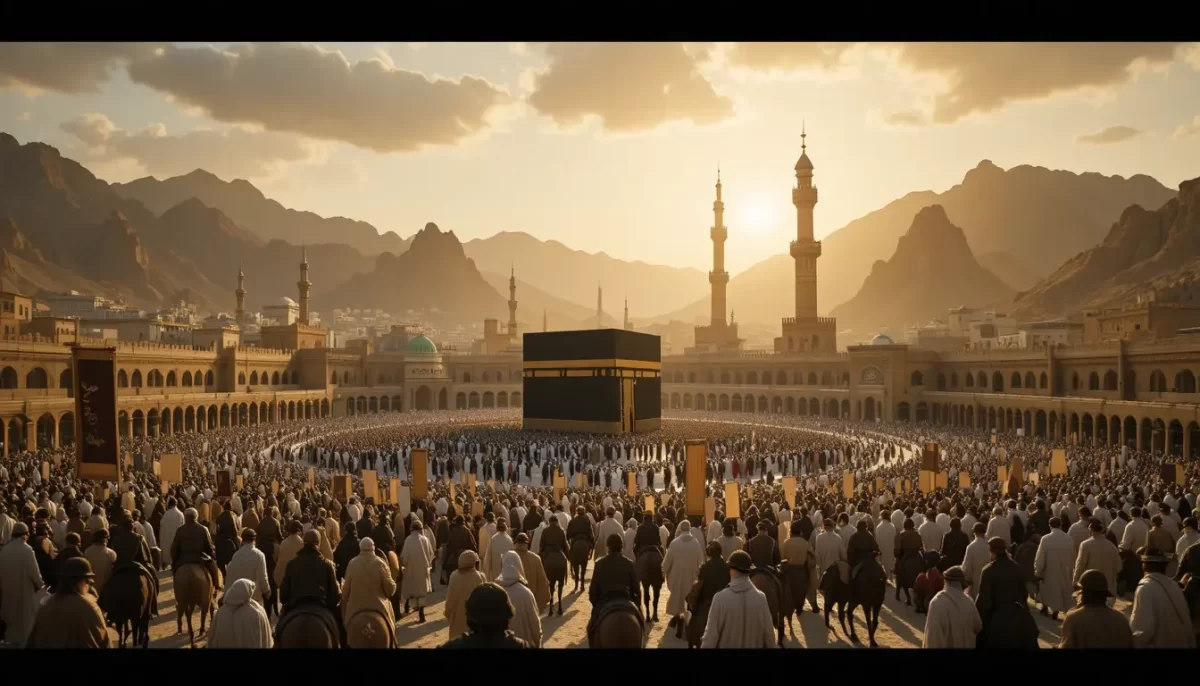
On the 10th of Ramadan in 8 AH (630 CE), the Prophet ﷺ departed Madinah with an army of 10,000 companions. On the 20th of Ramadan, they entered Makkah victoriously.
At that time, the Prophet ﷺ and his companions were fasting. Sayyiduna Abdullah ibn Abbas رضي الله عنه narrates that the Prophet ﷺ and his companions traveled while fasting.

Acceptance of Islam by Abu Sufyan
When the Muslim army reached near Makkah, they lit fires at multiple places. The Quraysh became fearful and sent Abu Sufyan to investigate. He was captured and brought to the Muslim camp.
Sayyiduna Abbas رضي الله عنه invited him to Islam, and he accepted Islam. His acceptance greatly weakened Quraysh’s morale.
General Amnesty
When the Prophet ﷺ entered Makkah, Abu Sufyan asked whether the Quraysh would be destroyed. The Prophet ﷺ declared:
“Whoever enters the house of Abu Sufyan will be safe.”
This shows the unmatched mercy of Islam, where even a former enemy was honored.

Rules of Warfare in Islam
The Prophet ﷺ declared:
- Do not kill the wounded
- Do not pursue those fleeing
- Do not kill prisoners
- Anyone locking themselves inside their house is safe
Purification of the Kaaba
The Kaaba contained many idols. The Prophet ﷺ ordered them to be removed and the Kaaba was purified from all idols.
Execution of a Blasphemer
A man named Ibn Khatal was executed due to repeated blasphemy against the Prophet ﷺ. He had severely insulted Islam and the Prophet ﷺ.
Sanctity of Makkah
The Prophet ﷺ stated that Makkah was made sacred by Allah. Fighting is not allowed in it except for a short time granted by Allah during the conquest.
Islamic Ruling on Blasphemy
Classical scholars mention that insulting the Prophet ﷺ is a major crime, and in Islamic law it carries severe punishment. However, implementation of legal punishment is the responsibility of the Islamic authority, not individuals.
Conclusion
The conquest of Makkah represents mercy, justice, discipline, and the victory of truth. It demonstrates that Islam spreads not only through strength but also through forgiveness, organization, and divine support.