English blogs will Cultivate your knowledge with Tooba Quran, offering insightful Islamic articles penned by scholarly minds. Enhance your understanding and deepen your insights with our expertly crafted content
The Importance And Virtue Of Hospitality
O the luminous presence, with respect and reverence in the court of the Intercessor of the Day of Judgment ﷺ, present your salutations and peace! O Allah, send blessings and peace upon our leader, our master, and our beloved Muhammad, and upon his family and companions, all of them.”(Read More)
Rights Of Children In Islam
Respected individuals! Children are the center of hopes, aspirations, and desires for any society because the future’s construction relies upon them. Therefore, children rightfully deserve more attention, compassion, and immense love compared to all other classes. From a societal perspective, the importance of children is acknowledged, and hence, the rights of children have been clearly outlined in Islamic teachings.”(Read More)
Huqooq Ul Ibad
Respected individuals! “Haqooq al-Ibad” is the right of one humankind to another who is next to your door. Encompasses the rights of parents, children, spouses, relatives, orphans, the poor, travelers, those in need, neighbors, seekers, prisoners, and others, as well as broader social and societal rights. However, we only give preference to prayers, fasting, zakat, etc, and we don’t even give any importance to huqooq ul ibad. It will be asked on judgment day. Unfortunately, despite the significance of human rights in Islamic law, we often neglect and overlook them. (Read More)
Rights of Spouses and Faithfulness
Allah, the Lord of the Worlds, has made marriage a blessing for the believers, establishing love and fidelity between spouses. The bond of matrimony is a source of purity, piety, and a means to protect against ill-sight, indecency, obscenity, nudity, and the marshes of sins and filth. (Read More)
Story Miraj (Prophet Muhammad ﷺ)
On the night of Miraj, Allah Almighty called the Prophet Muhammad, the Mercy for the Worlds, towards Himself and bestowed upon him a unique honor, proximity, and the vision of Himself, a privilege not granted to any other prophet. (Read More)
Rights of Relatives
The Sharia ruling on maintaining family ties Brothers in Islam! “Maintaining family ties means connecting with relatives, i.e., behaving kindly and respectfully towards relatives. The entire Ummah agrees that maintaining family ties is obligatory, and cutting off family ties is forbidden”. (Read More)
Blessings of Ramadan
The blessed month of Ramadan, a month full of mercy, is soon approaching for Muslims around the world. During Ramadan, there are countless opportunities to recite, understand, act upon, and spread the teachings and blessings of the Quran to others. Fasting, prayers, recitation of the Quran, voluntary prayers, and other remembrances and supplications help instill piety and the fear of Allah in a person’s heart. (Read More)
The Obligation and Rule of Zakat
Zakat is not only an important religious duty in Islam but also an excellent and effective means of solving economic and financial difficulties. The literal meaning of Zakat is to purify, correct, and grow, while in Islamic jurisprudence, Zakat means “a specific portion of wealth, which has been fixed by the pure Sharia, to be given for the pleasure of Allah Almighty to a Muslim who is legally considered poor, making them the owner of it. (Read More)
The Battle of Badr
The battle between truth and falsehood has been ongoing since the dawn of time, manifesting in various forms throughout history. Among these is the Battle of Badr, This monumental battle took place between the polytheists of Mecca and the Muslims on the 17th of Ramadan in the second year after the Hijra (migration to Medina), a Friday that witnessed an extraordinary event. Islam’s first major conflict.
Rights of Workers
May 1st is celebrated as International Workers’ Day. On this day, the whole nation enjoys a holiday, yet the worker labors for his daily bread even on this day. Some political and social organizations might hold rallies and events to fulfill a formality, but those linked to this day are not fully aware of its significance or their rights.
The Hereafter
Brothers in Islām! The belief in ākhirah or the Hereafter means that a Muslim has a firm belief (with utmost conviction) in the following
The Virtue of Makkah
Makkah Mukarramah is the sacred city where the Holy Prophet ﷺ was born and raised. It is from this blessed city that the sun of Islam rose brightly. The very first revelation descended upon the Holy Prophet ﷺ here.
How to Pray Salah As Per the Quran and Sunnah
We have created this simple guide for Muslims who want to learn how to pray salah correctly Quran and Sunnah way
Relationship Of A Muslim With Their Prophet
Maintain a strong connection with the noble personality of the Prophet Muhammad ﷺ and to follow and emulate his teachings is known as “Taluq bil-Rasool” (connection with the Prophet).
Hazrat Pir Mehar Ali Shah, and his Religious Services
Those noble saints and scholars of religion who lit the candle of Islam in the subcontinent of Pakistan and India, dedicated their entire lives to the propagation and dissemination of Islam, preached the oneness of Allah
Wasilah (Explanation of Seeking Intercession)
Wasilah means medium, intermediary, cause, support, and help. From the Quran, Hadith, and sayings of the scholars, seeking intercession (tawassul) is a proven concept, and denying it is something that no true believer can imagine.
The Blessings of Tahajjud
Every night, Allah Subhanahu Wa Ta’ala comes down to thе lowest sky calling His folks, offering forgiveness, repentance, аnԁ fulfillmeոt of what they need, а lovely offer. During the last third of the night, known for its special blessings, this divine call happens.
The Status of Hazrat Ali R.A.
The existence of the Companions (رضی الله عنه) is a source of mercy, blessings, and ease for us. They are like shining stars that guide wandering travelers through the darkness of disbelief, polytheism, and heresy to the straight path. The strong and expansive tree of Islam, under which we seek refuge today, has been nourished by the blood of these sacred personalities. Not only did they sacrifice their homes, lives, honor, and worldly positions, but they also did not hesitate to sacrifice their loved ones in the path of Allah to protect this steadfast religion from the fierce winds and storms of time.
The Meraj Un Nabi ﷺ
The miraculous journey of Al-Isra wal-Miraj (The Night Journey and Ascension) is one of the most extraordinary and awe-inspiring events in the life of the Prophet Muhammad ﷺ. It is a testament to his unparalleled status and the divine honor bestowed upon him by Allah Almighty. This miraculous event, which took place in the eleventh year of Prophethood (approximately 621 CE), on the 27th night of Rajab, is a unique distinction granted to the Prophet ﷺ, elevating him above all other Prophets and Messengers.
Negative Impact of TV Dramas on Pakistani Society
Electronic media has become a significant force in our time. Today, media plays a crucial role in shaping people’s positive or negative mindsets. Its power is evident as it is now considered the fourth pillar of the state. This power is akin to that of a drunken elephant! Even the rulers seek refuge from its influence and feel safer by maintaining good relations with it. Whether someone wants to make a hero or a popular leader overnight, or to bring down a hero to the ground, it is now a game played by electronic media.
Drawbacks of Sports and Islamic Teachings
Brothers in faith! Worship holds a unique status in Islam. To fulfill it properly, one must be physically healthy and energetic, whether it is prayer, fasting, Hajj, or other acts of worship and Sport. Health is among Allah’s greatest blessings. This is why Allah prefers a strong believer over a weak one. The Prophet (ﷺ) said:
“A strong believer is better and more beloved to Allah than a weak believer.” (Sahih Muslim)
The Concept of Jihad In Islam
My respected brothers! The universal teachings of Islam encompass every aspect of life. Islam ordains Jihad to establish peace, enforce justice, restore human rights, and eradicate oppression. In essence, Jihad is the continuous struggle to reform individual, communal, national, and international life in accordance with divine guidance.
Importance of Jihad and the Status of a Martyr
Every aspect of the noble life of the Prophet Muhammad (ﷺ) is profoundly significant and full of guidance. However, his struggle to uphold the truth known as Jihad or Ghazwat (battles) holds unparalleled importance for the political stability and progress of the Muslim Ummah. This is why the great scholars of the early generations (Khayr al-Quroon) paid immense attention to Jihad.
The Virtue of the First Ten Days of Dhul Hijjah
He has also guided us toward righteousness and designated certain times for us to accumulate abundant good deeds for the Hereafter. Among these blessed times is the month of Dhul-Hijjah, which is filled with immense blessings. The first ten days of Dhul-Hijjah are especially virtuous and exalted. Allah the Almighty has honored these days with great blessings, as mentioned in the Quran:
“By the dawn, and by the ten nights.” (Surah Al-Fajr 89:1-2)
The Protection of Environment
Islam is a religion that establishes principles guiding human interaction with the surrounding environment. Allah has commanded us to protect and preserve our environment while prohibiting wastefulness and extravagance. Excessive exploitation of natural resources leads to their destruction. Allah says in the Quran:
“Eat and drink, but do not waste. Indeed, He does not like the wasteful.” (Quran 7:31)
The Philosophy of Sacrifice and Our Society
The animal slaughtered during the Days of Sacrifice (Ayyam al-Nahr) with the intention of seeking closeness to Allah is termed Qurbani in Islamic terminology. Sadr al-Shari’ah, Allamah Amjad Ali A’zami (رحمة الله عليه) states:
“Sacrifice is the ritual slaughter of a specific animal on specific days with the intention of seeking nearness to Allah. Sometimes, the animal itself is referred to as Udhiyah or Qurbani. Sacrifice is the Sunnah of Prophet Ibrahim (عليه السلام), preserved for this Ummah of Muhammad ﷺ.”
The Second Caliph of Islam, Ameer al- Mu’mineen, Sayyiduna Umar al-Farooq AL-A’zam (May Allah be Pleased with him)
The Master of Prophethood, the Leader of the Universe ﷺ, and all his noble Companions (may Allah be pleased with them) are like shining stars. Any Muslim who takes any of them as a role model and guide will surely attain guidance. Ameer al-Mu’mineen, Sayyiduna Umar al-Farooq (may Allah be pleased with him), is one of these luminous stars—a radiant, dazzling beacon that illuminates the path of truth for misguided Muslims and dispels the darkness of misguidance from the hearts and minds of people across the world until the Day of Judgment.
The Objectives of the birth of the Mustafa (ﷺ)
My respected brothers! Celebrating the joy of the birth of the Mercy to the Worlds (ﷺ) is a cause of goodness and blessings. It is such a great act that by doing it, goodness in this world and the hereafter and numerous benefits and fruits are obtained. Not only Muslims, but even hardcore disbelievers and polytheists are not deprived of the blessings of this virtuous act; they also receive some share due to the Prophet (ﷺ).
Baba Farid Ganj-e-Shakar (May Allah have mercy on him)
All praise is due to Allah, the Lord of the worlds, and blessings and peace be upon the Seal of the Prophets and Messengers, and upon his family and companions altogether. To proceed: I seek refuge in Allah from the accursed Satan. In the name of Allah, the Most Gracious, the Most Merciful.
The Beauty and Elegance of the Prophet Muhammad (ﷺ)
O brothers in Islam! Mustafa, the essence of mercy (ﷺ), was from head to toe, a manifested light and an embodiment of beauty and grace. Just as the Master of the Universe (ﷺ) was unique and unparalleled in the perfection of his character, he was also matchless and incomparable in his external beauty and grace. Allah Almighty granted him everlasting beauty and grace. In all of creation, there is no one as beautiful and graceful as the Master of the Universe (ﷺ). If this mention of his beauty were to be summarized briefly, it would suffice to say that there is not a single complete intellect in the entire world that can fully comprehend the beauty, grace, and radiance of the Messenger of Allah (ﷺ)!
Mustafa, the Essence of Mercy… The Perfect Man
The Mercy to the Worlds (ﷺ) is the guide for humanity. The Noble Messenger (ﷺ) came to this world as the final Prophet of Allah, the Lord of the worlds. Therefore, the blessed life of the Prophet of Mercy (ﷺ) is a complete practical example for all humans to come until the Day of Judgment. Allah the Almighty says: “There has certainly been for you in the Messenger of Allah an excellent pattern…” (Surah Al-Ahzab, 33:21). “Indeed, for you in the Messenger of Allah is a fine example to follow!” Therefore, we must also follow the excellent example of the Master of the World (ﷺ) to the best of our ability, for in it lies success and triumph in this world and the hereafter!
The Etiquettes and Rulings of Naat Recitation & the superstitions of the Modern Era
If we look at the history of Naat, we find that among the Companions, Hazrat Sayyiduna Hassan bin Thabit (may Allah be pleased with him) was a Companion who was also a Naat-recitng poet. For this reason, he is also known as the Poet of the Court of Prophethood. Among his poetic praises, these verses are very famous, filled with love and ecstasy:
The Eleventh Sharif (Commemoration of Abdul Qadir Jilani)
Our Master, the Ghawth al-Pak (May Allah sanctify his secret), was born in the month of Ramadan al-Mukarram. From the very first day, he also observed fasting; from the time of Suhoor until Iftar, he would not drink his venerable mother’s milk.
The Greatest Helper (Al-Ghawth al-Azam) and his Teaching
the Holy Quran and performing supererogatory prayers. For fifteen years, he (May Allah sanctify his secret) completed one recitation of the Holy Quran every night.”
The Contempporary Relevance of the Teaching of Ghawth al-Azam (May Allah Sanctify His Soul)
Shaykh ‘Abd al-Qadir al-Jilani (May Allah sanctify his soul) departed from this world. Despite this, the importance of his spiritual, moral, and religious teachings remains entirely intact in this era of ruthless competition and materialism.
The Sufi Saints and their Teaching
Their faces are mirrors reflecting God.” Not only does one’s outward appearance become illuminated by the companionship of these servants of Allah the Generous, but one’s inward self also finds the means for reformation.
The Status, Rank, and Responsibilities of a Teacher
The Crown of Prophethood ﷺ was sent into this world as a teacher. Sayyidna Abdullah bin Amr ﷺ narrates that the Master of the Universe ﷺ said:
“I have been sent as a teacher.” (Sunan Ibn Majah)
The Menace of Fake Pirs (Spiritual Guides)
I like to clarify that the reformation of ignorant, non-practicing, or even evil-acting Pirs is also necessary, who wish to enter Paradise without acting upon the commandments of the Shari’ah. Among their ignorance is this attitude of theirs: these people consider themselves free from the commandments of the purified Shari’ah and even mock the commandments of the Shari’ah in front of people. While some ignorant people have started the business of Piri-Muridi merely to earn worldly wealth.
Prevention of Superstition at the Shrines of Saints
The shrines, monasteries, and centers of the religious elders are hubs of guidance, springs of spiritual blessings and grace, and are among the Symbols of Allah. Respecting and honoring them is obligatory upon every Muslim. From the first three golden generations until today, Muslims have continuously been visiting the shrines of saints to receive spiritual grace and solace.
The Importance and Necessity of Religious Politics
The fundamental objective of religious politics is to establish a righteous society in the light of Islamic teachings, where the Islamic system is implemented according to the commandments of the Quran and Sunnah. Where people are provided with impartial justice and fairness, where oppression and tyranny are eradicated and an atmosphere of peace and tranquility is established. Where the protection of people’s lives, wealth, honor, and rights is guaranteed.
The Muslim World and Scientific Thought
The systematic and impartial study of realities in their original form, and it is a method of knowing something through the light of one’s intellect, observations, and experiments. Its results are never final and absolute; rather, they are only the facts of the time until a new discovery arrives.
The Concept of Science in Islam and Muslim Inventions
The present era is one of scientific progress and technology. Astonishing inventions are being made every day. Because of these inventions, distances are shrinking; the world has become a global village. Communicating from one corner of the world to another has become extremely easy. Due to science and technology, media has advanced to such an extent that you can watch important events and news from around the world live on your mobile phone or TV set.
Children’s Rights in Islam
Islam has given children the same status in our society as is accorded to other segments of humanity. The compassionate and loving treatment that the Master of the Universe ﷺ showed towards children is both a reflection of their status in society and a guiding light for us. The importance of children’s rights can be gauged from the fact that Islam safeguards these rights even before their birth. Therefore, we are instructed to choose a righteous, noble, chaste, and well-mannered mother for these children
Respect for Elders and Upbringing of Children
Islam is a pure and comprehensive religion. It teaches us to interact with our elders and seniors with respect and honor. To help them, to remove their troubles and sufferings, to share their grief and pain, to treat them with sympathy, care, and kindness is a great virtue and a source of reward. Respect and love for elderly people is the best means of attaining the pleasure of Allah and His Messenger. Honoring them is to honor Allah.
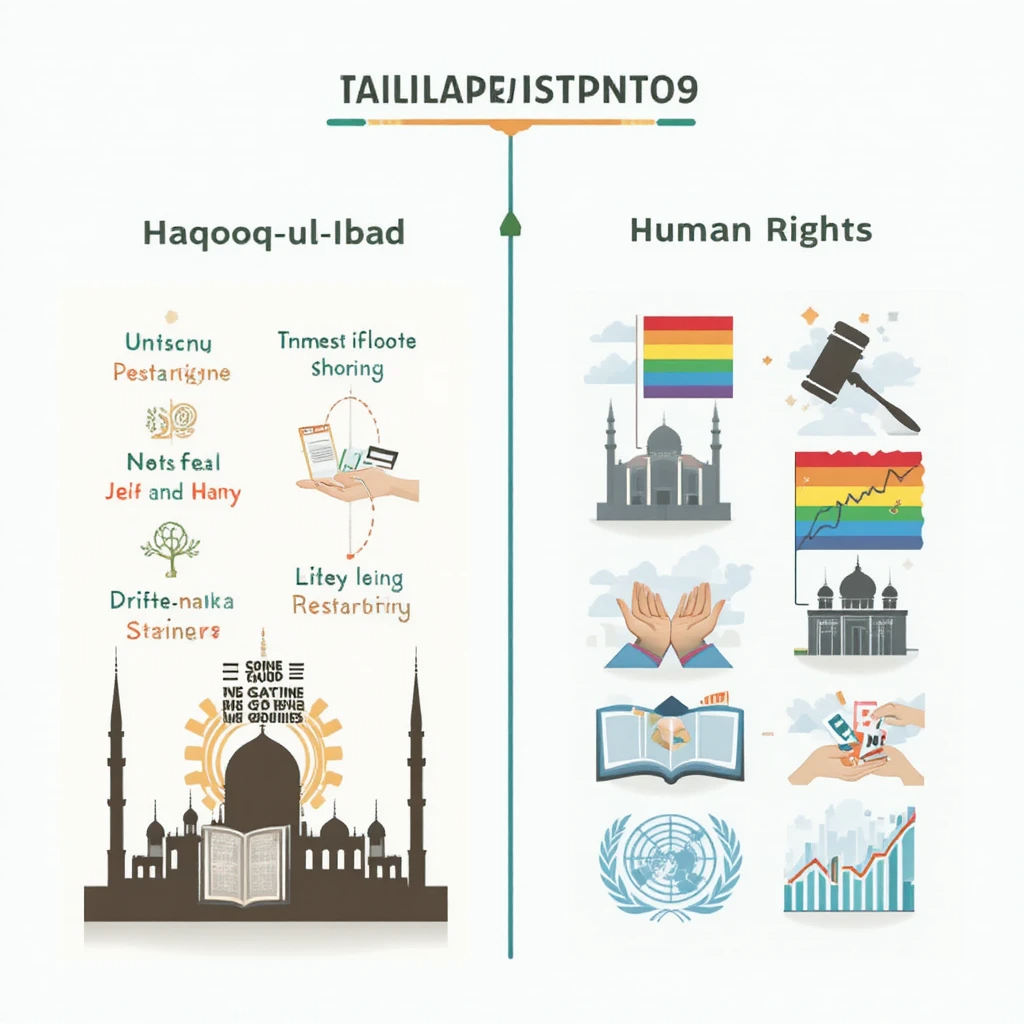
The Fundamental Difference: Rights Of Creation (Haqooq-UL-Ibad) VS. Western Human Rights
In an era where the term “Human Rights” dominates global discourse, a critical confusion has emerged within Muslim communities. Often, this Western concept is mistakenly translated simply as “human rights” or even equated with the Islamic principle of Haqooq-ul-Ibad (Rights of Creation). This is not a mere linguistic oversight; it is a profound conceptual error with serious implications for Muslim faith, identity, and civilization. As conscious believers, it is imperative to dissect and understand the philosophical chasm that separates these two frameworks.
The Greatest Of Mankind After the Prophets: Sayyiduna Abu Bakr AL-Saddiq
In a world craving authentic leadership and unwavering faith, the life of Sayyiduna Abu Bakr Al-Siddiq (رضي الله عنه) stands as a timeless beacon. His story is not merely a historical account; it is a masterclass in loyalty, integrity, and governance that resonates profoundly with modern seekers of truth and purpose. As the closest companion to the Final Prophet Muhammad (ﷺ) and his immediate successor, Abu Bakr’s (رضي الله عنه) legacy offers profound lessons in spiritual devotion, political wisdom, and personal sacrifice. This article delves into the exemplary life of the First Caliph, exploring the divine wisdom behind his virtues and the practical guidance his leadership provides for Muslims and all people of conscience today. His journey from a trusted friend to the leader of the nascent Muslim state encapsulates the very essence of faith in action, making his biography essential reading for understanding Islamic history and principles.
Sayyiduna Abu Bakr As-Siddiq (RA) and his Model Of Islamic Governance
True leadership is not defined by power, wealth, or authority—it is defined by integrity, sacrifice, and unwavering commitment to justice. Among the most luminous examples of such leadership in human history stands Sayyiduna Abu Bakr As-Siddiq (RA), the first Caliph of Islam and the closest companion of the Prophet Muhammad ﷺ. His life reflects a rare harmony of faith, humility, and administrative wisdom.
From the caves of migration to the pulpit of governance, Abu Bakr’s journey offers timeless lessons for leaders, scholars, and believers alike. His caliphate laid the foundations of Islamic governance rooted in accountability, mercy, and obedience to Allah. Understanding his system of leadership is not merely a historical exercise—it is a guide for ethical leadership in every age.
Sayyiduna Abu Bakr As-Siddiq (RA)The First in Rank, Faith, and Leadership
Among the towering figures of Islamic history, one name shines with unmatched clarity, sincerity, and sacrifice: Sayyiduna Abu Bakr As-Siddiq (RA). His life was not merely close to the Prophet Muhammad ﷺ—it was inseparable from the very mission of Islam. From the earliest days of revelation to the most critical moments after the Prophet’s passing, Abu Bakr stood as Islam’s strongest pillar.
Maulana Rumi and His Concept Of Sufism: Faith, Discipline, and Spiritual Transformation
In times of moral collapse, social chaos, and spiritual confusion, history often raises figures whose wisdom restores balance and meaning. One such towering personality is Maulana Jalal al-Din Rumi, whose life and teachings emerged during one of the darkest periods of the Muslim world. Amid Mongol invasions, political instability, and ethical decline, Rumi stood as a guardian of Islamic knowledge and spiritual discipline. Far from being a poet of emotional mysticism alone, he was a jurist, teacher, and reformer deeply rooted in Islamic law. Understanding Rumi’s true concept of Sufism is essential today, especially in an era where his legacy is frequently misunderstood or misrepresented.
Prevention Of Corruption in Islam: Quranic Teachings, Prophetic Guidance, and Moral Accountibility
Corruption is not merely a legal or economic issue—it is a profound moral crisis that destroys trust, justice, and social harmony. Across the world, nations suffer economic collapse, institutional instability, and moral decay due to corruption. Islam, as a complete code of life, addresses this destructive evil with unmatched clarity and depth. Through the Qur’an, the teachings of the Prophet Muhammad ﷺ, and a strong emphasis on accountability in the Hereafter, Islam lays down a powerful framework for preventing corruption at both individual and societal levels.
Virtues Of Shaban In Islam: A Sacred Month Of Fasting, Purification, And Preparation For Ramdan
The Messenger of Allah ﷺ devoted himself to worship in Shaban more than in any other month outside Ramadan. His practice clearly establishes the elevated status of this sacred time.
“That is a month people neglect between Rajab and Ramadan. It is the month in which deeds are raised to the Lord of the worlds, and I love that my deeds be raised while I am fasting.”
— Reported by Usamah ibn Zayd (رضي الله عنه)
This Hadith alone positions Shaban as a month of conscious devotion, sincerity, and accountability.
Privacy In Islam VS Europe: The Islamic Concept Of Personel Privacy And Human Dignity
In today’s hyper-connected world, personal privacy is rapidly disappearing. Surveillance cameras, digital tracking, phone tapping, and social media exposure have blurred the boundaries of private life. Yet more than fourteen centuries ago, Islam established a complete ethical framework protecting human dignity, personal space, and confidentiality.
Islam does not treat privacy as a modern luxury—it recognizes it as a divine right. From entering homes to guarding secrets, from avoiding suspicion to prohibiting spying, Islamic teachings offer a timeless system that safeguards individuals and preserves social harmony. This article explores the Islamic concept of privacy and contrasts it with contemporary European practices.
Sayyiduna Amir Muawiyah (RA): Life, Achievements, And Lagacy Of A Great Sahabi
Sayyiduna Amir Muawiyah (RA) stands as one of the most distinguished companions (Sahaba) of Prophet Muhammad ﷺ. Born five years before the Prophetic mission, he played a pivotal role in the growth and administration of the early Islamic state. From his unwavering dedication to Islam to his exemplary governance in Syria, Amir Muawiyah’s life serves as a beacon of leadership, knowledge, and piety. This article delves into his remarkable biography, highlighting his virtues, accomplishments, and lasting impact on Islamic history.
Virtues And Rulings Of The 15Th Night Of Shaban (Shab-e-Barat): Forgiveness, Worship, And Devine Mercy
Among the sacred nights blessed by Allah, the 15th night of Sha‘ban, widely known as Shab-e-Barat (the Night of Deliverance), holds a deeply spiritual place in the hearts of Muslims. It is a night of forgiveness, mercy, and divine attention—when Allah opens the doors of repentance and showers His servants with compassion.
This blessed night invites believers to cleanse their hearts, renew their faith, and reconnect with their Creator through worship, du‘a, and sincere repentance.
Let us explore the virtues, authentic narrations, recommended acts, and important rulings of Shab-e-Barat, so we may benefit from this sacred opportunity in the best possible way.
The Kashmir Issues And The Responsibility Of The Muslim Ummah
The Kashmir issue is not merely a political dispute or a territorial conflict—it is a deep humanitarian tragedy and a profound moral test for the Muslim Ummah. For more than seven decades, the people of Kashmir have endured oppression, denial of basic rights, and systematic injustice. Despite international resolutions, diplomatic statements, and media narratives, the suffering of Kashmiri Muslims continues largely unchecked.
Tolerance And Broad-Mindedness In Islamic Jurisprudence: Understanding Fiqh Differences
Islam is a complete and comprehensive religion, guiding humanity across all ages. Its principles are timeless, capable of addressing the evolving social, economic, and cultural challenges of each era. Central to Islam’s richness is its jurisprudential tradition (Fiqh), which reflects the deep reasoning and scholarly effort of the learned. In matters of Fiqh, differences of opinion among scholars are not signs of disunity; rather, they are manifestations of mercy, wisdom, and flexibility designed to benefit the Ummah (Muslim community). This article explores the importance of tolerance, the causes of jurisprudential differences, and how historical scholars exemplified broad-mindedness.
Worship And Spiritual Dicipline In Ramadan
Ramadan arrives not merely as a date on the calendar, but as a divine invitation to reset the soul. It is the season of mercy, forgiveness, and transformation. Hearts soften, habits are challenged, and priorities are realigned. In this blessed month, ordinary deeds gain extraordinary weight.
For believers seeking closeness to Allah, Ramadan is a training ground. It refines character, strengthens willpower, and reconnects us with purpose. The question is not whether Ramadan is virtuous — it is whether we will truly benefit from it.
Zakat In Islam: A Fundamental Obligation, Purification, and Social Justice
Zakat is not merely a financial duty—it is a powerful act of worship, purification, and compassion. It connects wealth with responsibility and faith with generosity. Through Zakat, Islam builds a society where prosperity circulates, hardship is eased, and hearts are cleansed from greed.
For Muslims, Zakat stands alongside prayer and fasting as a pillar of religious life. Ignoring it is not a minor oversight but a serious spiritual risk.
This article explains what Zakat truly means, who must pay it, its benefits, consequences of neglect, eligible recipients, and essential rulings.
Sayyida Fatima Al-Zehra: Virtues, Life Lessons & The Honor Of The Prophets Daughter
Love for the family of the Prophet ﷺ is not merely emotion — it is faith, reverence, and guidance. Among the radiant personalities of the Ahl al-Bayt (Family of the Prophet), Sayyida Fatima al-Zahra (RA) stands as a symbol of purity, patience, dignity, and devotion. Her life offers timeless lessons for women, families, and believers seeking closeness to Allah.
Sayyidah Khadijah Al-Kubra (RA): Life, Virtues, And Legacy In Early Islam
Throughout Islamic history, many great personalities helped shape the message of Islam. Among them stands one of the most remarkable and noble women ever known—Sayyidah Khadijah al-Kubra (RA), the beloved wife of Prophet Muhammad ﷺ and the first believer in Islam.
Inflation In Islam: Causes Of Rising Prices And Islamic Solution To Economic Crises
Inflation has become one of the most pressing challenges of the modern world. Almost every country is struggling with rising prices, but the impact is particularly devastating in developing nations. In countries like Pakistan, the surge in prices after the COVID-19 pandemic has pushed millions of people into severe economic hardship.
Basic necessities such as cooking oil, flour, sugar, vegetables, meat, electricity, gas bills, school fees, and fuel have become increasingly unaffordable even for the middle class. For daily wage laborers and those living below the poverty line, survival itself has become a painful struggle.
The Blessings Of I’tikaf In Islam
As the sacred month of Ramadan reaches its final stretch, a unique opportunity unfolds—one that allows believers to disconnect from the distractions of the world and reconnect deeply with their Creator. This powerful act of devotion, known as spiritual retreat (Iʿtikāf), is not merely a ritual but a transformative journey of the soul.
In these final ten nights, hearts soften, prayers intensify, and the pursuit of divine mercy reaches its peak. For those seeking closeness to Allah, forgiveness, and the hidden treasures of Laylat al-Qadr, Iʿtikāf offers a gateway unlike any other.
This guide explores the meaning, history, virtues, rules, and immense spiritual benefits of Iʿtikāf, helping you understand how to make the most of this blessed practice.
Pakistan Day In The Light Of Current Affair
Pakistan Day is not merely a historical reminder—it is a powerful call to reflection, unity, and responsibility. Every year on March 23, we commemorate a defining moment that shaped the destiny of millions of Muslims in the subcontinent. But beyond celebrations and ceremonies, this day urges us to ask a deeper question: Are we truly fulfilling the purpose for which Pakistan was created?
At a time when challenges surround us—social division, economic struggles, and moral decline—the message of Pakistan Day becomes even more relevant. It reminds us of sacrifice, unity, faith, and commitment to Islamic values.
This is not just history—it is a living responsibility.
Eid Al-Fitr In Islam
Eid al-Fitr is not just a celebration—it is the divine reward granted to believers after a month of fasting, عبادت (‘ibādah’ – worship), and spiritual discipline. After enduring the days of رمضان (Ramaḍān) with patience, prayer, Qur’an recitation, and sincere repentance, Muslims are honored with a day of happiness and gratitude.
This blessed occasion is meant to express joy while remembering Allah’s countless blessings. It is a day when hearts are purified, communities are united, and generosity reaches its peak. However, the true beauty of Eid lies in following the teachings of Islam and the noble practices of the Prophet ﷺ.
Night Vigil In Islam (Qiyam Al-Layl)
When the world falls silent and people drift into deep sleep, a rare group rises—not for worldly gain, but to stand before their Lord. This sacred act, known as night vigil (Qiyam al-Layl), is among the most spiritually elevating practices in Islam.
It is a time when distractions fade, sincerity deepens, and the heart connects directly with Allah. From the Prophets to the righteous predecessors, night worship has always been a hallmark of true devotion.
But what exactly is night vigil? Why is it so emphasized? And how should a believer approach it correctly—especially in Ramadan?
The Role Of Women In Islamic History
From the earliest days of Islam, women have played a powerful and transformative role in shaping society, preserving faith, and supporting the mission of Islam. Far from being confined to limited roles, Muslim women emerged as scholars, warriors, caregivers, and leaders who contributed meaningfully to both spiritual and worldly progress.
Hazrat Aisha Siddiqa (RA)
Among the most revered women in Islamic history stands Umm al-Mu’minin Hazrat Aisha Siddiqa (رضي الله عنها)—a symbol of purity, knowledge, and devotion. Her life is not only a biography but a complete guide to faith, character, and scholarship for both men and women.
As the beloved wife of Prophet Muhammad ﷺ and the daughter of Hazrat Abu Bakr Siddiq (RA), she holds a unique status in Islam. Her contributions to Hadith, Fiqh, and Islamic ethics shaped generations of scholars.
Mujahid Of Islam Allama Rahmatullah Kairanvi
In an era when speaking the truth was considered a crime—and defending Islam could cost one’s life—one remarkable scholar stood firm. Allama Rahmatullah Kairanvi (رحمت اللہ کیرانوی) emerged as a fearless defender of Islam, a master debater, and a key figure in both intellectual and physical resistance against colonial and missionary forces.
His life was not merely about scholarship—it was a story of courage, migration, sacrifice, and unwavering commitment to truth. From defeating Christian missionaries in public debates to participating in the War of Independence of 1857, his legacy continues to inspire scholars and seekers of truth across the Muslim world.
Rising Trend Of Suicide In Islam
Suicide is no longer a rare tragedy—it has become a growing global crisis affecting individuals, families, and entire communities. Behind every statistic lies a story of pain, hopelessness, and emotional struggle. In today’s fast-paced world, increasing mental stress, financial burdens, and social pressures have pushed many toward despair.
The Day Of Destruction Of Jannat Al-Baqi
The destruction of the sacred graves in Jannat al-Baqi remains one of the most emotionally significant and historically debated events in Islamic history. For millions of Muslims worldwide, this day symbolizes not just a historical incident, but a deep spiritual loss connected to the legacy of the Ahl al-Bayt (family of the Prophet ﷺ) and the Sahabah (Companions).
Dajjal And The Signs Of The End Times In Islam
In an age of misinformation, moral confusion, and global uncertainty, the Prophetic warnings about the greatest trial before the Day of Judgment feel more relevant than ever. Islam teaches that one of the most dangerous and deceptive trials humanity will face is the emergence of the False Messiah—al-Masih ad-Dajjal.
This is not merely a distant theological concept; it is a reality that every believer is urged to understand, prepare for, and guard against. The Prophet Muhammad ﷺ repeatedly warned his الأمة (Ummah) about Dajjal’s فتنة (trial), emphasizing its severity and deception.
Ghazwa-e-Hind In Islam
These narrations are found in various hadith compilations and have been interpreted in multiple ways throughout Islamic history. Some scholars view them as prophetic signs of future events, while others debate their authenticity or historical application.