
Table of contents
- Introduction
- What is the Day of Destruction of Jannat al-Baqi?
- First Demolition: Historical Background
- Liberation and Reconstruction
- Second Demolition in 1925
- Global Reaction of the Muslim World
- Islamic Teachings on Respecting Graves
- Spiritual Reality: Do the Dead Feel Harm?
- Scholarly Consensus on the Honor of the Dead
- Why Respecting Sacred Sites Matters
- Annual Observance and Muslim Sentiment
- Conclusion
- Frequently Asked Questions About The Day of Destruction of Jannat al-Baqi
Introduction
The destruction of the sacred graves in Jannat al-Baqi remains one of the most emotionally significant and historically debated events in Islamic history. For millions of Muslims worldwide, this day symbolizes not just a historical incident, but a deep spiritual loss connected to the legacy of the Ahl al-Bayt (family of the Prophet ﷺ) and the Sahabah (Companions).
Every year, the 8th of Shawwal revives this memory, reminding believers of the importance of respecting sacred sites and preserving Islamic heritage. This article explores the historical events, scholarly perspectives, and Islamic teachings regarding the احترام (honor) of graves.
Read More: The Sufi Saints and Their Teachings
What is the Day of Destruction of Jannat al-Baqi?
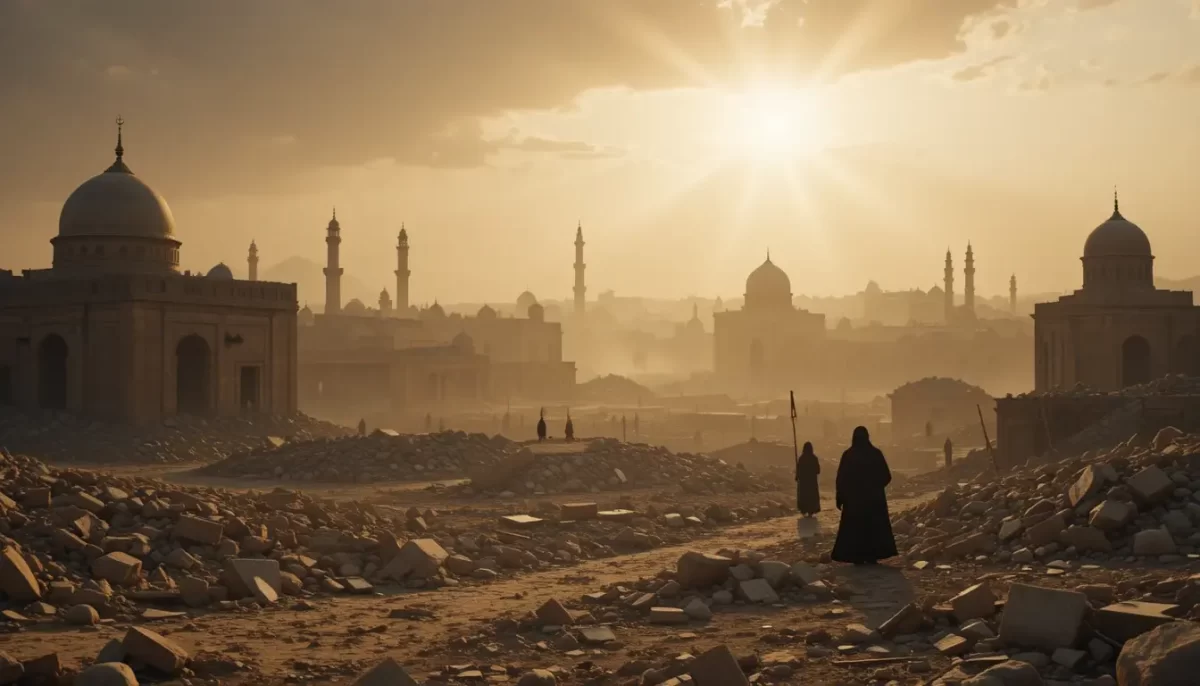
The Day of Destruction of Jannat al-Baqi refers to the demolition of the graves located in the historic cemetery of Madinah known as Baqi al-Gharqad.
This cemetery holds the blessed graves of:
- Members of the Ahl al-Bayt
- Prominent Sahabah
- Great Islamic personalities
The destruction occurred in two major phases, leaving a lasting impact on the Muslim world.
First Demolition: Historical Background
According to historical reports, in 1220 AH, extremist forces laid siege to Madinah for nearly one and a half years. After creating famine-like conditions, they entered the city and demolished the domes over the graves—except for the blessed grave of the Prophet ﷺ.
Key Outcomes:
- Sacred structures over graves were destroyed
- Control of Madinah was forcefully taken
- Deep grief spread among Muslims
Liberation and Reconstruction
In 1227 AH (1812 CE), the forces of Muhammad Ali Pasha, along with the people of Madinah, reclaimed the city.
What Happened Next:
- Occupying forces were defeated
- Many were captured near Bab al-Shami
- The destroyed shrines were rebuilt
This restoration brought temporary relief to the Muslim world.
Second Demolition in 1925
In 1344 AH (1925 CE), the graves of Jannat al-Baqi were once again demolished under the rule of Abdul Aziz ibn Saud.
Why is 8th Shawwal Important?
- Marks the second demolition
- Known globally as the Day of Destruction of Baqi
- Observed with sorrow and reflection

Read More: The Menace of Fake Pirs (Spiritual Guides)
Global Reaction of the Muslim World
The destruction sparked widespread outrage across Muslim and non-Muslim countries.
Countries That Reacted:
- India, Turkey, Iran, Iraq
- Afghanistan, Uzbekistan, Azerbaijan
- China and beyond
People expressed:
- Grief through letters and protests
- Fear that even the Prophet’s ﷺ grave could be targeted
Islamic Teachings on Respecting Graves
Islam emphasizes dignity and respect for both the living and the deceased.
Hadith Evidence
“Do not sit on graves, nor harm the people of the graves.”
(Reported in Hadith collections)
“Just as I dislike harming a believer in life, I also dislike harming him after death.”
(Attributed to Abdullah ibn Mas‘ud رضي الله عنه)
Key Principles:
- Sitting on graves is prohibited
- Leaning or stepping on graves is discouraged
- Disturbing graves is a serious offense
Spiritual Reality: Do the Dead Feel Harm?
Islamic scholars and early righteous individuals affirmed that the deceased can feel harm.
Example from a Tabi‘i (Successor):
Abu Qilabah al-Basri reported that he once slept on a grave and later experienced a complaint from the deceased:
“You have caused me discomfort all night.”
This highlights the spiritual sensitivity associated with graves.
Scholarly Consensus on the Honor of the Dead
Islamic scholars unanimously agree:
- The dignity of a deceased Muslim equals that of a living one
- Violating graves is a form of disrespect
- Even the “roof” of a grave is considered a right of the deceased
This makes large-scale destruction even more serious.
Why Respecting Sacred Sites Matters
Respecting graves is not about worship—it is about:
- Preserving Islamic heritage
- Honoring righteous individuals
- Maintaining historical continuity
Key Takeaways:
- Graves remind us of the Hereafter (Akhirah)
- They strengthen spiritual connection
- They teach humility and reflection
Annual Observance and Muslim Sentiment
Every year on 8th Shawwal:
- Muslims express grief and remembrance
- Calls are made for reconstruction
- Awareness is spread globally
This day continues to unite Muslims emotionally and spiritually.
Conclusion
The destruction of Jannat al-Baqi is not merely a historical event—it is a reminder of the importance of احترام (respect), heritage, and unity within the Muslim Ummah.
Islam teaches balance: honoring the dead without exaggeration, and preserving sacred history without compromising Tawhid (oneness of Allah).
Understanding this topic helps Muslims reconnect with their roots and uphold the dignity that Islam demands.
Frequently Asked Questions About The Day of Destruction of Jannat al-Baqi
1. What is Jannat al-Baqi?
It is the main cemetery of Madinah where many companions and family members of the Prophet ﷺ are buried.
2. Why were the graves demolished?
They were demolished due to a strict interpretation opposing structures over graves.
3. Is visiting graves allowed in Islam?
Yes, visiting graves is encouraged for reflection and remembrance of the Hereafter.
4. Is it allowed to sit on graves?
No, sitting or disrespecting graves is prohibited in Islam.
5. Why is 8th Shawwal significant?
It marks the second demolition of Jannat al-Baqi in 1925.
6. Do the dead feel anything?
Islamic teachings suggest that the deceased can feel certain forms of harm or discomfort.
7. What is the Islamic ruling on destroying graves?
Scholars strongly discourage any act that disrespects graves or harms the deceased.